
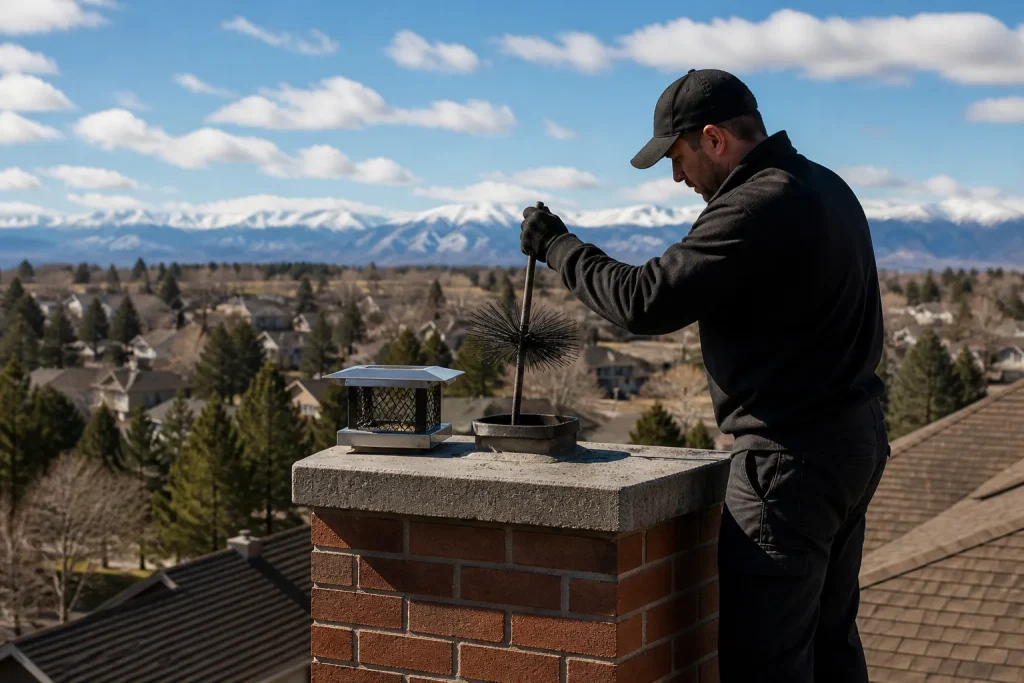
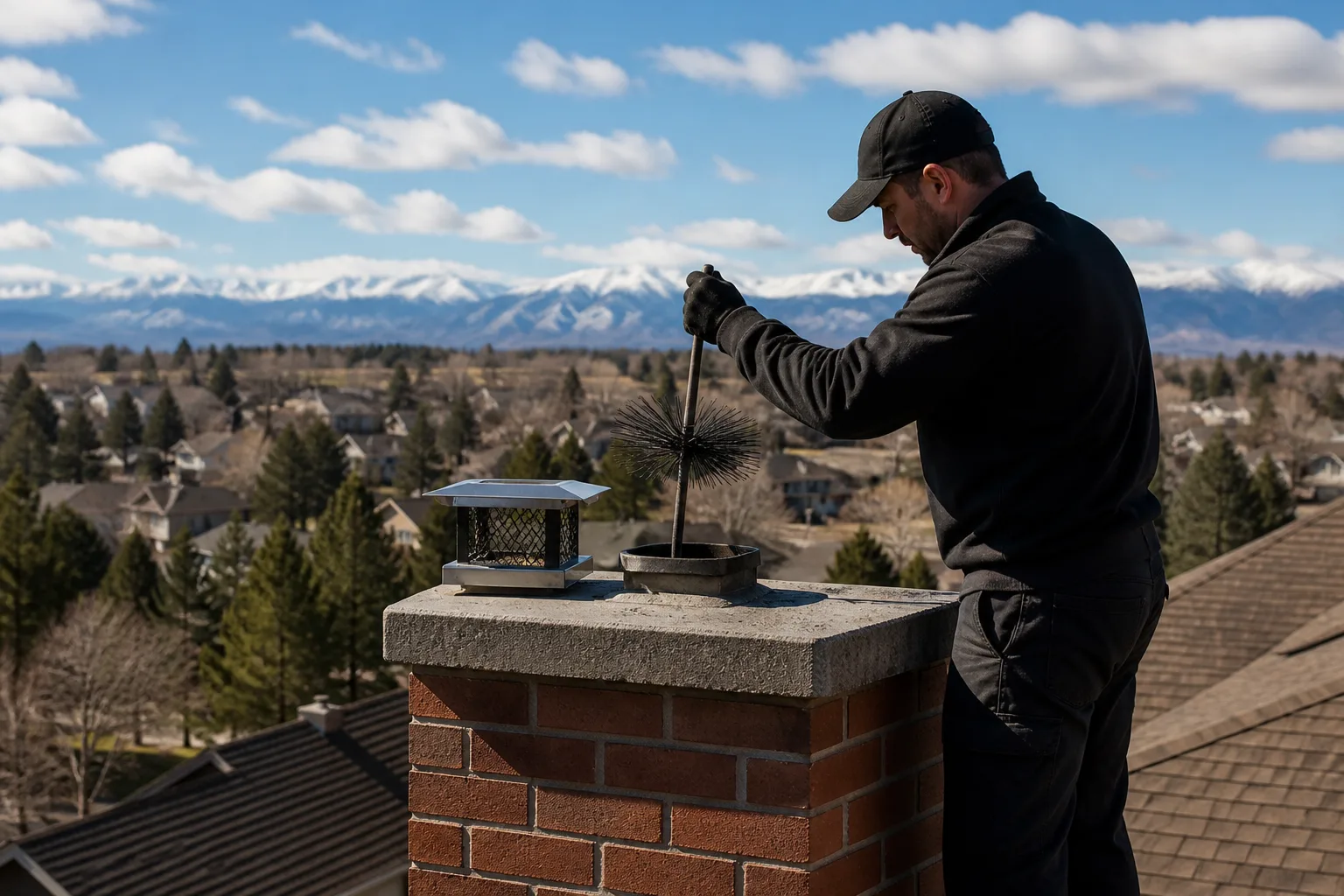
DuraFlex Chimney Sweep in Centennial: A Homeowner’s Guide
Most liner failures we’re called out to inspect aren’t material failures at all – they’re installation failures. Rigid stainless sections forced through a flue that was never straight to begin with, joints left under tension, connectors set without proper sealant. DuraFlex was engineered to solve that first problem, but the other two are still on the installer. If you’d rather not sort that out yourself, call (855) 629-6492.
A DuraFlex liner in a Centennial home is a flexible stainless flue system that conforms to the actual shape of your chimney instead of fighting it. That distinction matters more here than in most places, and this guide explains when DuraFlex is the right specification and what a correct installation actually involves.
Key Takeaways
- DuraFlex is a flexible stainless liner system, not a rigid-section product – it bends to follow offset and irregular flues.
- In Centennial’s older housing stock, decades of settled masonry often leave flues out of plumb, which is exactly where flex liners outperform rigid pipe.
- Correct sizing matters more than the brand name. An undersized liner for a wood stove creates back-pressure and overheats the appliance.
- A proper installation includes a top plate, an appliance connector, insulation wrap for wood-burning applications, and documentation of what went in.
- Flex and clay tile flues need the same annual inspection, but the checklist differs at each cleaning.
What Is a DuraFlex Chimney Liner, and What Is It Made Of?
A DuraFlex liner is a continuous length of corrugated stainless steel tube that drops down your chimney as a single piece, forming a sealed flue from the appliance to the top of the chimney. It’s manufactured from stainless steel alloy suited to the fuel you burn, and the corrugated wall is what lets it flex without kinking as it follows the chimney’s interior. The system is UL listed as a relining product, which is the specification your local inspector will want to see before sign-off.
Where it differs from rigid liner is in how it handles movement. Rigid sections are straight pipe joined with mechanical couplings. When a chimney warms up, stainless expands, and on a rigid run that expansion has nowhere to go but into the joints. Corrugated flex absorbs that thermal movement along the length of the wall itself, so the joints at the top plate and the appliance connector aren’t taking the strain.
In our experience across Centennial, that’s why we specify DuraFlex on the majority of relines and reserve rigid pipe for chimneys that are genuinely straight and unobstructed. A straight flue is rarer than you’d think.
When Does DuraFlex Outperform Rigid Liner in Centennial Homes?
DuraFlex is the better choice whenever your flue isn’t a clean, straight cylinder – offset flues, irregular masonry, and older Centennial-era construction all point the same direction. Homes built through Centennial’s mid-century growth years have had decades for mortar joints to shift, for a previous liner to spall, or for an addition to change the chimney’s path. When we drop a camera in Centennial, we frequently find a flue that wanders.
The conditions that favor flex:
- Offset flues – the chimney jogs partway up. Rigid pipe can’t make that turn in one run, so it gets forced, and forced pipe is where premature failure begins.
- Irregular masonry – protruding mortar, spalled clay tile, or a flue that’s oval rather than round in cross-section.
- Damaged original tile – a cracked clay liner that can’t be replaced economically but can be lined over.
- Short chimneys with tight clearances – where there simply isn’t room to get rigid sections and couplings past the smoke chamber.
Where we specify rigid instead: a straight, round, clean flue with good access and no offsets. Paying for flex you don’t need is as much a mistake as forcing rigid where it doesn’t belong. We inspect the full system – liner, crown, cap, firebox, and flue – before we recommend anything, and the camera footage is yours to look at.
Why Sizing Your DuraFlex Liner to the Appliance Matters
A DuraFlex liner must be sized to the appliance it serves, not to the flue it passes through. An undersized liner for a wood stove chokes the draft, creates back-pressure in the firebox, and forces the stove to run hotter than it was designed to – which over-fires the system and shortens its life. An oversized liner cools the exhaust too quickly, encouraging creosote condensation on the walls.
The sizing calculation starts from the appliance’s flue collar and the manufacturer’s specified flue diameter, then factors in the chimney’s height and the number of elbows in the run. A taller chimney drafts harder and can carry a slightly larger diameter; a shorter one needs the tighter match. This is also the point where we check that the new liner’s diameter will physically clear the smoke chamber and any offsets, which is a second reason flex wins in tight Centennial chimneys.
Caps and crowns get addressed in the same visit, since a correctly sized liner under a failing crown will still take on water. We handle chimney cap & crown work with manufacturer-grade components rather than improvised flashing and sealant, and we check both before we close out a reline. We also carry HeatShield – the resurfacing solution most sweeps don’t stock or know how to apply – for cases where the smoke chamber or flue needs smoothing before a liner goes in.
What Does a Proper DuraFlex Installation Involve?
A proper DuraFlex installation is a four-part job, and skipping any part is how the “material failure” stories start. Here’s what the process looks like when it’s done right:
- A full inspection and camera scan first. We need to see the whole flue before we order the liner. Anything missed here gets discovered halfway through, and halfway through is the expensive time to discover it.
- The liner is measured and cut to length at the top. A flex liner is delivered in a continuous length and trimmed to the chimney’s actual height – no couplings inside the flue.
- Insulation wrap for wood-burning applications. Wood appliances benefit from an insulated wrap around the liner, which keeps flue gas temperatures up and reduces creosote formation on the liner wall. Gas appliances have different requirements.
- Top plate, appliance connector, and documentation. The top plate seals the chimney at the crown, the appliance connector joins the liner to the stove or insert, and the documentation records what was installed, its listing, and the components used – the paperwork your inspector and your insurer both want to see.
We install DuraFlex and Famco components because they’re the professional tier of chimney products – the same lines chimney professionals rely on nationwide – and because they come with the documentation trail a proper job requires. A clean installation is also a code-compliant one, so the liner and the paperwork get resolved in a single visit.
Maintaining a DuraFlex-Lined Flue vs. a Clay Tile Flue
Both a DuraFlex-lined flue and a clay tile flue need an annual inspection and sweep, but what we’re looking for at each cleaning is different. A clay tile flue is inspected for cracked or spalled tiles, missing mortar joints, and gaps between tile sections. A DuraFlex flue is inspected for creosote buildup inside the liner, damage or separation at the appliance connector, corrosion at the top plate, and any deformation of the corrugated wall.
Your annual cleaning schedule follows the same rule either way: sweep when the creosote layer reaches roughly an eighth of an inch, more often if you burn green wood or burn frequently through the heating season. In Centennial’s dry climate, we see plenty of chimneys that build creosote faster than the homeowner expects, particularly where wood isn’t fully seasoned.
The flex liner is generally easier to sweep cleanly because it’s a continuous smooth-ish interior with no mortar ledges to trap deposits. The tradeoff is that the appliance connector and top plate become the vulnerable points – which is precisely why they’re checked every year rather than every few.
When to Call a Pro
Any reline is a professional job. The work involves working at height on the roof, handling a long stainless liner, and confirming that the finished installation meets the listing requirements your inspector will check. There’s also the matter of the existing flue: you can’t know whether a DuraFlex liner is even the right choice until someone has put a camera down the chimney and looked.
What you can do yourself is call it early. If you’ve noticed a draft that’s weaker than it used to be, staining on the chimney exterior, or a smell in the firebox between burns, those are signs worth a professional look before the next burning season – not after. When the answer is “your liner is fine, just dirty,” we’ll tell you that. Our technicians have up to 8 years of experience, and we’re just as happy to sweep a sound chimney as to reline a failing one.
Related services in Centennial: we handle the full system, so a chimney sweep and inspection often reveals a fireplace problem at the same time. If your firebox or damper needs attention, our fireplace repair service covers that in the same visit.
The Bottom Line
DuraFlex is the right specification for most relines in Centennial because it follows the flue your house actually has rather than the one the drawing assumed. The material handles thermal expansion along its length, so the joints and connectors aren’t doing the work. But the liner is only as good as the installer who sized it, wrapped it, sealed the top plate, and handed you the documentation.
If you’re in Centennial and need a liner assessed, a chimney swept, or just a straight answer about what’s in your flue, Centennial Chimney Sweep offers free estimates – call (855) 629-6492. We answer 24/7. Fast dispatch from 7am to 7pm, Sunday through Friday. Nothing gets recommended without camera evidence you can look at yourself, and if the work can safely wait, we’ll say so.
For the broader picture of what we do across the full chimney system, start at Centennial Chimney Sweep.
Frequently Asked Questions
DuraFlex is better whenever the flue isn’t straight or round – offset flues, irregular masonry, and older Centennial homes where settled construction has shifted the flue geometry. Rigid pipe is fine for a straight, clean, unobstructed flue. The deciding factor is the camera inspection, not the brand.
The liner must match the appliance manufacturer’s specified flue diameter, adjusted for chimney height and the number of elbows in the run. An undersized liner creates back-pressure and over-fires the stove. Ask to see the sizing calculation along with the installation documentation – a proper job includes it. Call (855) 629-6492 for an exact quote – estimates are free.
For wood-burning applications, an insulated wrap is generally specified because it keeps flue gas temperatures up and reduces creosote formation on the liner wall. Gas appliances have different requirements, so the answer depends on what you burn. We confirm this before ordering the liner.
Once a year at minimum, and more often if you burn frequently or burn unseasoned wood – the same rule as clay tile. Sweep when creosote reaches about an eighth of an inch. At each annual cleaning we also check the appliance connector and top plate, since those are the vulnerable points on a flex system. Call (855) 629-6492 to book a sweep and inspection – estimates are free.
Written by the team at Centennial Chimney Sweep.
Need Chimney Cleaning Help?
Call Centennial Chimney Sweep - the local pro we connect you with is licensed and insured, with free written estimates in Centennial.
(855) 629-6492